A programme
A year with a Sudanese women’s group in Australia.
It started with a chance meeting near a retreat centre in New South Wales, and turned into a year of meditation — a day together, then most mornings online.
How it began
A chance meeting.
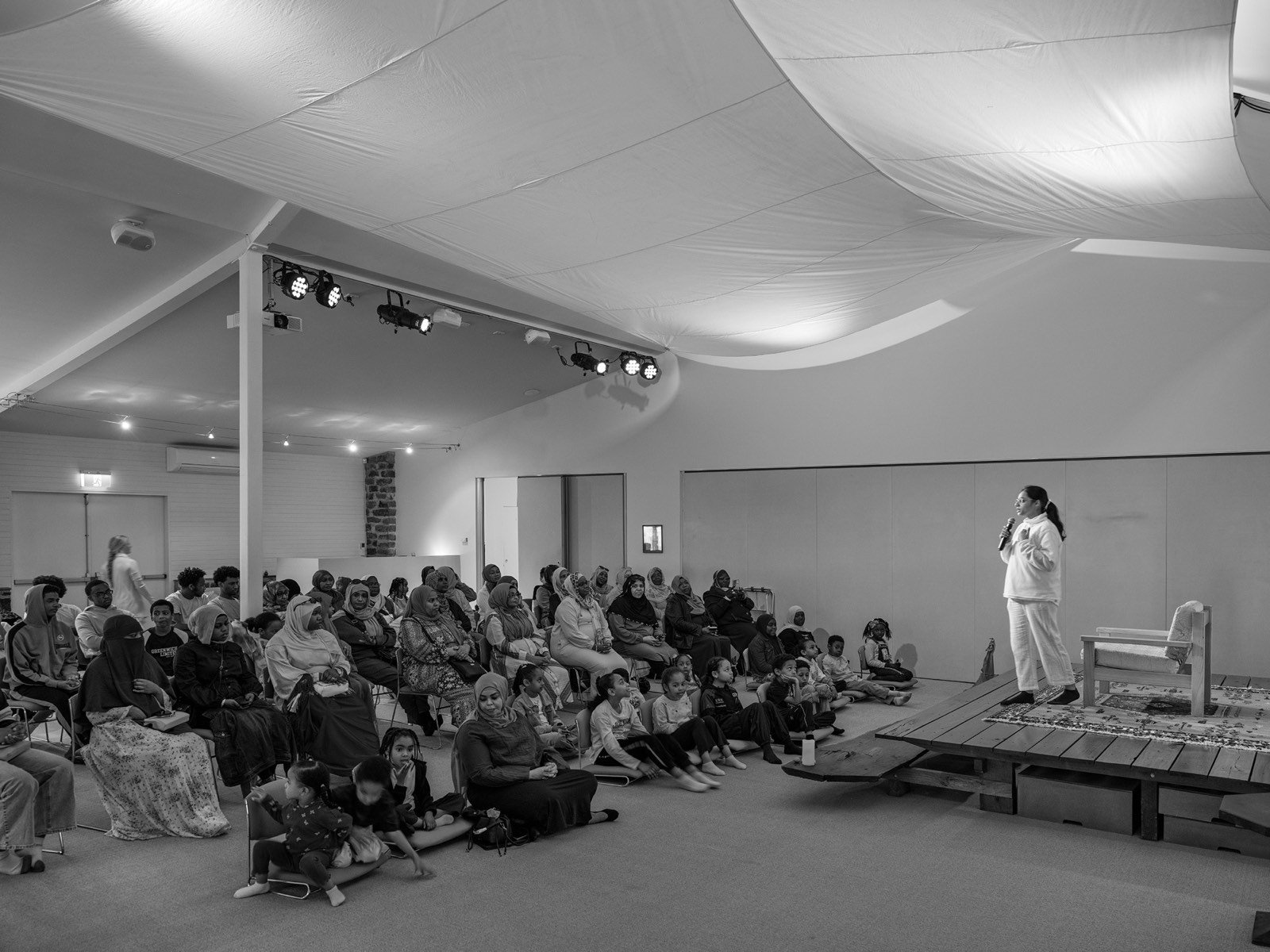
On a visit to Australia in 2024, Smriti called in at a medical clinic near the Brahma Kumaris retreat centre at Wilton, and fell into conversation with a local Sudanese doctor. Many of the doctor’s patients — around seventy-five women — had left Sudan during the civil war. A good number were widowed or raising children alone, often unable to work here in the professions they had trained for.
Smriti offered to spend a day with them. That day, in September 2025, grew into something longer.
The day, and what followed
Less around the edges, more of the quiet.
The first sessions were a combination — meditation alongside gentle movement, music and drawing, whatever helped a wary room settle. As trust built over two or three months, the group asked for less around the edges and more of the practice itself. A full hour became a well-used half hour of meditation. One group went so deep in a guided relaxation that it took them a while to come back.
A smaller group then carried on online, meeting most days with Smriti and a co-facilitator. A few written lines went round each morning to sit with. Attendance was uneven at first, and nobody pushed — it steadied on its own.
- —A day together at the retreat centre, September 2025
- —Meditation, movement, music and art, in combination
- —Narrowing over months to a half hour of meditation
- —A smaller group continuing online, most mornings
- —A short written reflection each day
The creative sessions
Room to play.
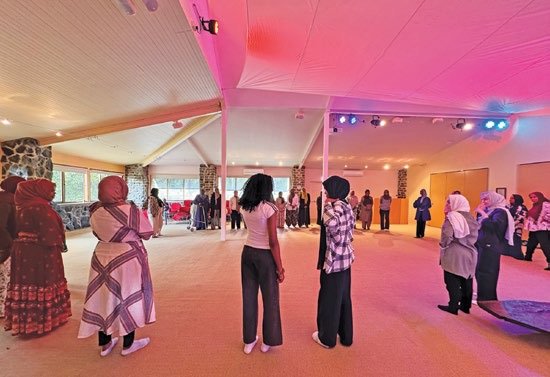
Alongside the meditation there were musical games and drama, a Chinese brush-painting workshop, and a session of freeform drawing. For a group carrying a lot, the play mattered as much as the stillness.
“There is something really powerful about a women’s group. At the core of being human is also the notion of play. For adults, especially those going through difficulties, engaging in these games with spontaneity and imagination lets you go outside yourself in a way that frees you.”
In their words
What the participants noticed.
“When I first started, little things would make me angry or stressed. After a few sessions I started to feel calmer. I’ve noticed such a difference in how I talk to my kids — now, even when something goes wrong, I just stay calm, breathe, and think positive.”
“I learned how powerful the subconscious mind can be if I reprogramme it — a new habit, a new way of thinking. I write down my thoughts, goals and fears, and it gives me a clear view of my inner self. That awareness guides me in what I need to change.”
“I used to be short-tempered — little things made me very angry, and I would get migraines and stomach aches when I was anxious. After following the sessions, especially the practices that quietened my mind, it helped a lot. When I go to bed now I use the breathing techniques, and I sleep better.”
“It felt like watching clouds pass across the sky — each thought appearing and disappearing without needing my attention. At the end of the session I felt refreshed and balanced, as if I had pressed a reset button for my mind.”
Smriti on the year
Give people love first.
“I never try to impose knowledge. My only intention is to give them love. If you want to change someone, give them so much love that first you build trust — and never point out someone’s weak points, or make them feel wrong.”
“Because I have to serve them, I have to improve my own character and my own meditation. I can’t serve anyone if my practice is not steady. It’s a beautiful way of serving yourself.”
Between sessions, Smriti has been recording conversations with experienced Western practitioners for the Light of Knowledge International channel, and folding what comes up into the group’s morning reflections as it grows with new beginners.
Elsewhere
A programme like this can be arranged wherever the need is there.
Online, in person, or a mix of the two — for a community group, an organisation, or a few people who would like to begin together. It is offered free of charge, as a service.